Introduction
If you’ve ever mailed a letter, ordered products online, or filled out an address form in the United States, you’ve likely encountered a ZIP Code. While these five-digit numbers may seem simple, they play a critical role in the American postal system and help ensure that mail reaches its intended destination quickly and accurately.
This beginner-friendly guide explains what ZIP Codes are, how they work, why they matter, and how to understand the different formats used across the United States.
What Is a ZIP Code?
A ZIP Code is a postal code used by the United States Postal Service (USPS) to identify specific geographic delivery areas. The term ZIP stands for Zone Improvement Plan, a system introduced to make mail sorting and delivery more efficient.
ZIP Codes help postal workers and automated sorting systems determine where mail should be routed, reducing delivery times and minimizing errors.
A Brief History of ZIP Codes
Before ZIP Codes were introduced, mail sorting relied heavily on city names and local postal knowledge. As the population grew and mail volumes increased, the USPS needed a more organized system.
In 1963, the USPS officially launched the ZIP Code system. The goal was to streamline mail processing by assigning numerical codes to different regions across the country.
Later, in 1983, the USPS introduced the ZIP+4 format, providing even greater precision for mail delivery.
Understanding the Standard 5-Digit ZIP Code
A standard ZIP Code consists of five digits:
Example: 10001
Each digit has a specific meaning:
| Digits | Purpose |
|---|---|
| First digit | Represents a broad geographic region |
| First three digits | Identify a sectional center facility (SCF) or regional mail processing center |
| Last two digits | Designate a specific post office or delivery area |
For example:
- 10001 is located in New York City.
- The first digit 1 represents part of the northeastern United States.
- The first three digits identify a mail processing area.
- The final two digits narrow the location further.
What Is ZIP+4?
The ZIP+4 system adds four additional digits after the standard ZIP Code.
Example: 10001-1234
The format looks like this:
12345-6789The extra four digits help identify:
- Specific buildings
- Apartment complexes
- Business locations
- High-volume mail recipients
- Individual delivery routes
ZIP+4 improves delivery accuracy, especially for large organizations and densely populated areas.
How ZIP Codes Are Organized
The United States is divided into ten major ZIP Code regions.
| First Digit | Region |
|---|---|
| 0 | Northeastern states |
| 1 | Mid-Atlantic region |
| 2 | Southeast region |
| 3 | Southern states |
| 4 | Midwest region |
| 5 | Central states |
| 6 | South Central region |
| 7 | South Central and Plains states |
| 8 | Mountain states |
| 9 | Western states and Pacific territories |
For example:
- ZIP Codes beginning with 0 are found in states such as Massachusetts and Connecticut.
- ZIP Codes beginning with 9 are commonly used in California, Washington, Hawaii, and Alaska.
Examples of Well-Known ZIP Codes
Some ZIP Codes have become famous due to their association with major cities or cultural references.
| ZIP Code | Location |
|---|---|
| 10001 | New York, New York |
| 90210 | Beverly Hills, California |
| 60601 | Chicago, Illinois |
| 33109 | Miami Beach, Florida |
| 94105 | San Francisco, California |
The ZIP Code 90210 gained worldwide recognition through the television series Beverly Hills, 90210.
Why ZIP Codes Matter
ZIP Codes are used for much more than mail delivery.
1. Shipping and Logistics
Courier services use ZIP Codes to calculate:
- Shipping costs
- Delivery times
- Distribution routes
2. Online Shopping
E-commerce websites rely on ZIP Codes to:
- Verify addresses
- Estimate shipping charges
- Determine product availability
3. Demographic Research
Businesses and researchers analyze ZIP Code data to understand:
- Population trends
- Income levels
- Consumer behavior
4. Emergency Services
ZIP Codes help agencies identify service areas and allocate resources more effectively.
5. Marketing
Companies often target advertising campaigns based on ZIP Code demographics.
ZIP Code vs. Postal Code
People outside the United States often use the term postal code. While the concepts are similar, ZIP Code specifically refers to the American system.
Examples include:
| Country | Postal System |
|---|---|
| United States | ZIP Code |
| Canada | Postal Code |
| United Kingdom | Postcode |
| Australia | Postcode |
| Germany | Postleitzahl (Postal Code) |
In short, every ZIP Code is a postal code, but not every postal code is a ZIP Code.
Common Misconceptions About ZIP Codes
ZIP Codes Always Match City Boundaries
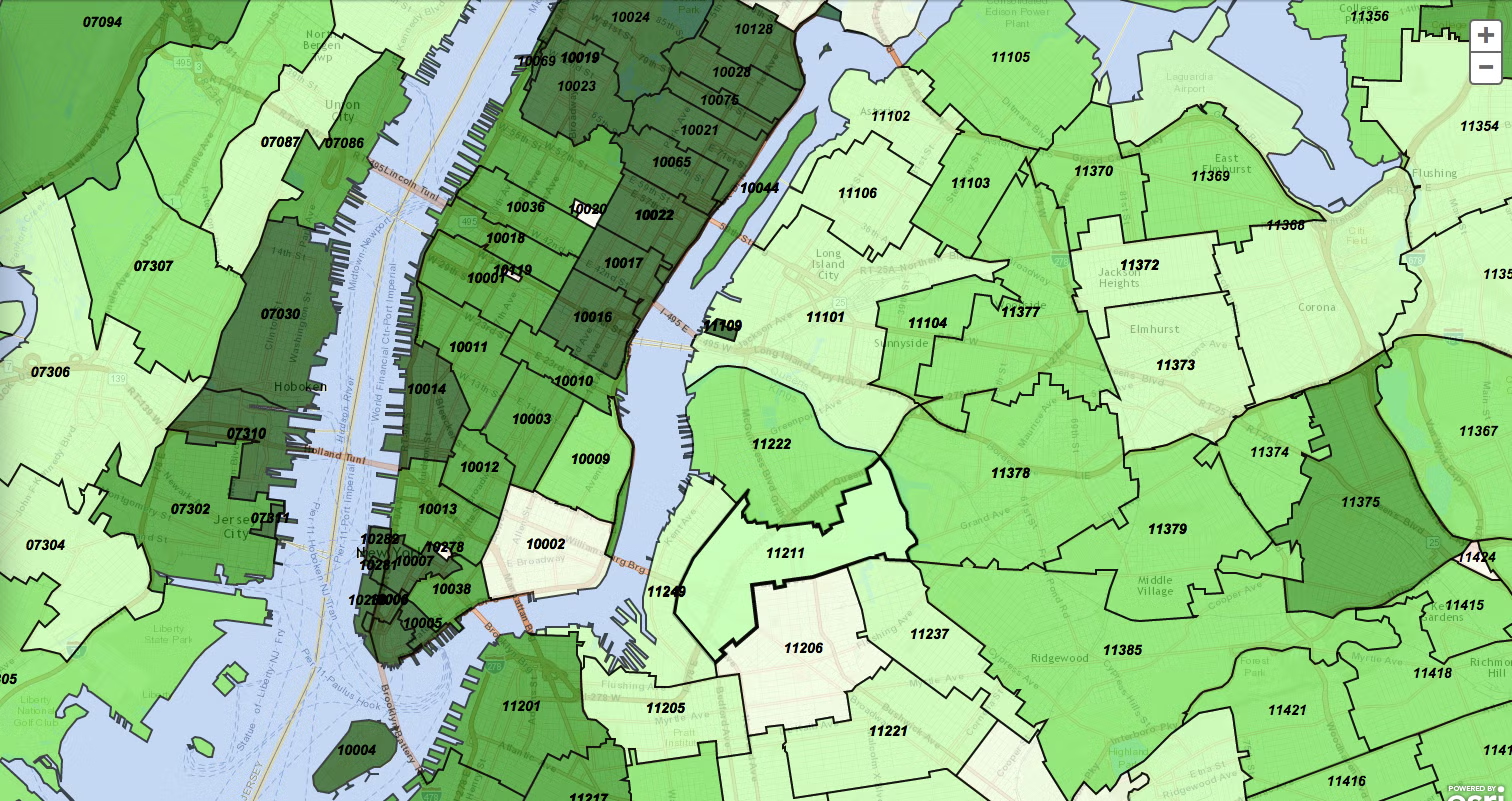
Not necessarily. A ZIP Code is designed for mail delivery efficiency, not for defining city limits. One ZIP Code may cover multiple communities, and one city may contain many ZIP Codes.
ZIP Codes Never Change
ZIP Codes can change over time due to population growth, urban development, or postal service adjustments.
ZIP Codes Represent Neighborhoods
While people often associate ZIP Codes with neighborhoods, USPS creates ZIP Codes based on delivery routes rather than community identities.
How to Find a ZIP Code
You can find a ZIP Code by:
- Using the USPS ZIP Code Lookup tool.
- Checking utility bills or official mail.
- Looking up addresses through mapping services.
- Asking local postal authorities.
Always verify ZIP Codes when mailing important documents to avoid delivery delays.
Tips for Using ZIP Codes Correctly
- Double-check the ZIP Code before sending mail.
- Include the ZIP+4 code when available.
- Ensure the city and state match the ZIP Code.
- Use standardized address formatting.
- Verify addresses for online purchases and business correspondence.
Conclusion
ZIP Codes are a fundamental part of the United States postal system. Introduced to improve mail delivery efficiency, they now serve a much broader purpose in logistics, e-commerce, marketing, demographics, and public services.
Understanding how ZIP Codes work can help individuals and businesses improve address accuracy, reduce shipping errors, and navigate the American mailing system more effectively. Whether you’re sending a letter, running an online store, or simply learning about U.S. addresses, a solid grasp of ZIP Codes is an essential piece of knowledge.