Introduction
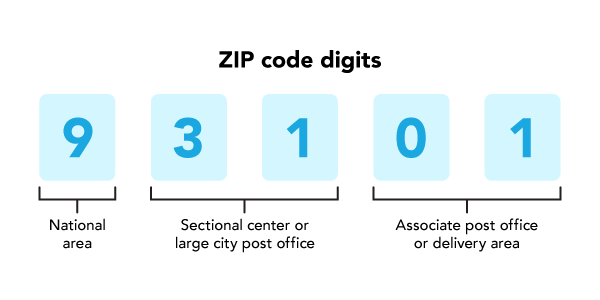
Most people in the United States are familiar with the standard five-digit ZIP Code used in mailing addresses. However, many addresses also include an additional four digits separated by a hyphen, creating what is known as a ZIP+4 Code.
While these extra numbers may seem insignificant, they play an important role in improving mail delivery accuracy and efficiency. For businesses, government agencies, and organizations that send large volumes of mail, ZIP+4 Codes can help reduce delivery errors, speed up processing, and lower mailing costs.
This article explains what ZIP+4 Codes are, how they work, and why they continue to matter in an increasingly digital world.
What Is a ZIP+4 Code?
A ZIP+4 Code is an extended version of the standard five-digit ZIP Code used by the United States Postal Service (USPS).
A regular ZIP Code looks like this:
10001A ZIP+4 Code includes four additional digits:
10001-1234The first five digits identify a general delivery area, while the additional four digits pinpoint a more specific location within that area.
This enhanced precision helps the USPS sort and deliver mail more efficiently.
The History of ZIP+4 Codes
The USPS introduced ZIP+4 Codes in 1983 as part of an effort to improve mail automation and processing efficiency.
By the early 1980s, mail volume in the United States had grown dramatically due to:
- Business correspondence
- Direct marketing campaigns
- Government mailings
- Increased consumer communication
To handle this growth, the USPS needed a more precise addressing system that could support automated sorting technologies.
ZIP+4 Codes were designed to provide that additional level of detail.
How ZIP+4 Codes Work
The standard ZIP Code identifies a broad geographic delivery area.
The extra four digits narrow the destination further.
A ZIP+4 Code may identify:
- A specific city block
- An apartment complex
- A group of offices
- A high-volume mail recipient
- A particular delivery route
- A government building
This level of detail allows sorting equipment to route mail more accurately before it reaches local carriers.
Breaking Down a ZIP+4 Code
Consider the following example:
30301-5678First Five Digits: 30301
These digits identify the primary ZIP Code area.
They determine:
- Geographic region
- Mail processing facility
- Local postal service area
Last Four Digits: 5678
These digits identify a smaller delivery segment within the ZIP Code.
They may correspond to:
- A specific building
- A section of a street
- Individual floors of an office tower
- Particular delivery routes
Together, the nine digits create a highly specific destination identifier.
Why ZIP+4 Codes Matter
Although mail can often be delivered using only the standard five-digit ZIP Code, ZIP+4 Codes offer several important advantages.
Improved Delivery Accuracy
The additional digits help ensure mail reaches the intended destination more precisely.
This is especially valuable in:
- Large office complexes
- Apartment buildings
- University campuses
- Government facilities
Accurate addressing reduces the likelihood of delivery errors and misrouted mail.
Faster Mail Processing
Modern USPS sorting systems rely heavily on automation.
ZIP+4 Codes provide machines with more detailed routing information, allowing mail to move through the system more efficiently.
Benefits include:
- Faster sorting
- Reduced handling
- Shorter delivery times
- Improved operational efficiency
The more information available in an address, the easier it is for automated systems to process it correctly.
Reduced Mailing Costs for Businesses
Organizations that send large quantities of mail often use ZIP+4 Codes to qualify for postal discounts.
Businesses can reduce costs by:
- Using address verification software
- Applying ZIP+4 Codes to mailing lists
- Meeting USPS automation requirements
These savings can be substantial for companies that send thousands or millions of pieces of mail each year.
Better Address Validation
ZIP+4 Codes are frequently used in address verification systems.
Banks, insurance companies, government agencies, and online retailers often validate addresses using ZIP+4 databases.
This helps:
- Confirm address accuracy
- Prevent data entry errors
- Improve customer records
- Reduce undeliverable mail
Accurate address data is essential for efficient business operations.
Common Places Where ZIP+4 Codes Are Used
ZIP+4 Codes are particularly useful in locations with many recipients sharing the same primary address.
Examples include:
Apartment Buildings
Different units may receive unique ZIP+4 assignments.
Office Towers
Specific suites or departments may have distinct ZIP+4 Codes.
Universities
Large campuses often use ZIP+4 Codes to identify individual buildings or departments.
Government Facilities
Federal, state, and local agencies frequently use ZIP+4 Codes for efficient mail handling.
Corporate Headquarters
Large organizations often receive unique ZIP+4 designations to streamline incoming correspondence.
How to Find a ZIP+4 Code
There are several ways to locate a ZIP+4 Code.
USPS ZIP Code Lookup
The USPS provides address lookup tools that can identify ZIP+4 Codes for valid addresses.
Official Correspondence
Many utility bills, bank statements, and government documents include ZIP+4 information.
Address Verification Software
Businesses often use specialized software that automatically appends ZIP+4 Codes to customer addresses.
Using official sources ensures the information is accurate and up to date.
ZIP+4 and Modern Technology
ZIP+4 Codes remain relevant even in the age of GPS and digital mapping.
Many systems use ZIP+4 data for:
- Logistics planning
- Shipping optimization
- Geographic analysis
- Fraud prevention
- Customer data management
Although modern navigation technologies provide precise coordinates, ZIP+4 Codes continue to serve as a standardized location identifier for postal and commercial applications.
ZIP+4 vs. Standard ZIP Codes
| Standard ZIP Code | ZIP+4 Code |
|---|---|
| Five digits | Nine digits |
| General delivery area | Specific delivery segment |
| Suitable for most mail | Provides enhanced accuracy |
| Basic routing information | Detailed routing information |
| Commonly used by consumers | Frequently used by businesses and organizations |
Both formats are valid, but ZIP+4 offers greater precision.
Do You Always Need a ZIP+4 Code?
For most personal mail, a standard five-digit ZIP Code is sufficient.
However, using a ZIP+4 Code can improve delivery performance, particularly when:
- Sending important documents
- Mailing to large organizations
- Managing business correspondence
- Processing bulk mailings
While it is not usually required, including the ZIP+4 Code is considered a best practice when available.
Common Misconceptions About ZIP+4 Codes
ZIP+4 Codes Are Only for Businesses
Although businesses use them extensively, individuals can also benefit from improved delivery accuracy.
Every Apartment Has a Unique ZIP+4 Code
Not necessarily. ZIP+4 assignments vary depending on local postal routing requirements.
ZIP+4 Replaces the Standard ZIP Code
The ZIP+4 system extends the standard ZIP Code rather than replacing it.
ZIP+4 Is Outdated
Despite advances in technology, ZIP+4 Codes remain an important part of USPS operations and address management systems.
The Future of ZIP+4 Codes
As logistics networks become more sophisticated, accurate location data will continue to be essential.
ZIP+4 Codes support:
- Automated mail sorting
- Address verification
- E-commerce fulfillment
- Government operations
- Business communications
Even as digital technologies evolve, the USPS and many organizations continue to rely on ZIP+4 Codes to improve efficiency and accuracy.
Conclusion
ZIP+4 Codes are a valuable extension of the standard U.S. ZIP Code system. Introduced to improve mail processing and delivery accuracy, they provide a more detailed way to identify specific locations within a broader ZIP Code area.
From faster mail sorting and reduced delivery errors to business cost savings and address verification, ZIP+4 Codes offer significant benefits across a wide range of applications. While many people rarely notice the extra four digits, they play a crucial role behind the scenes in keeping America’s mail and logistics systems running smoothly.
Understanding how ZIP+4 Codes work can help individuals and organizations improve address accuracy, enhance communication, and ensure that important mail reaches its destination efficiently.