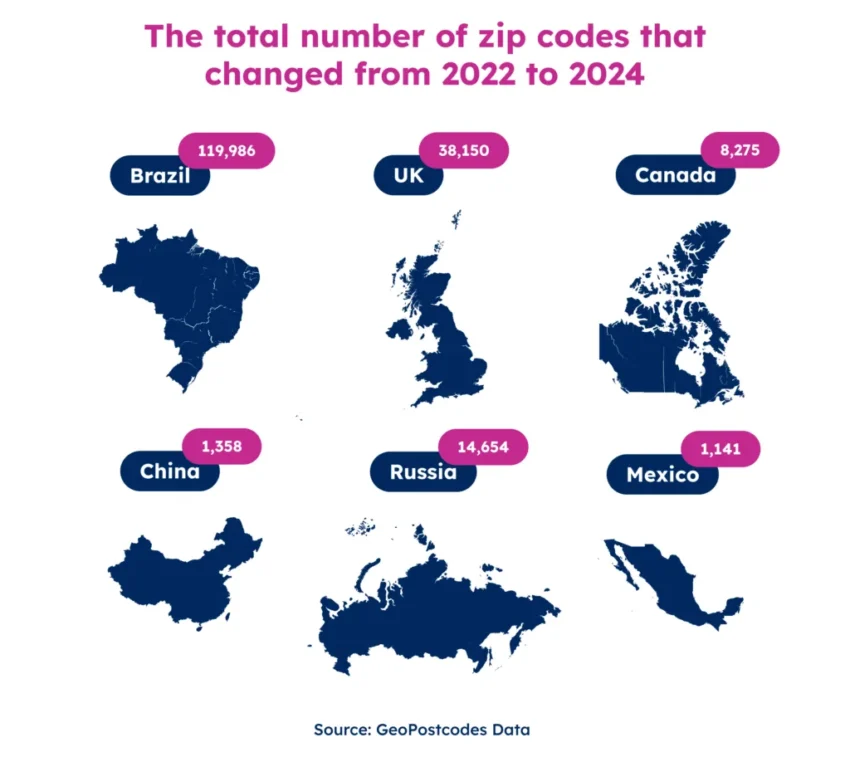
For decades, ZIP Codes have been an essential part of everyday life in the United States. Introduced to improve the efficiency of mail delivery, these five-digit codes have become much more than postal tools. Today, ZIP Codes support online shopping, banking, navigation, emergency services, healthcare, logistics, and countless digital platforms.
At the same time, technology is transforming how people interact with location-based services. Artificial intelligence (AI), smart cities, autonomous vehicles, geographic information systems (GIS), and digital mapping have created new ways to identify places with incredible precision. Some emerging technologies can pinpoint a location within just a few feet, leading many people to ask an important question:
Are traditional ZIP Codes still necessary, or will future address systems replace them?
While address technology continues to evolve, traditional ZIP Codes remain deeply integrated into the nation’s infrastructure. Instead of disappearing, they are likely to become part of more advanced location systems that combine the reliability of postal addresses with the precision of modern digital technology.
This article explores the future of address systems and examines whether traditional ZIP Codes will continue to play a vital role in the digital age.
Understanding the Purpose of ZIP Codes
ZIP stands for Zone Improvement Plan, a system introduced by the United States Postal Service (USPS) in 1963.
The primary goal was to simplify mail sorting and improve delivery speed across a rapidly growing nation.
A standard ZIP Code consists of five digits.
Many addresses also use ZIP+4, which adds four additional numbers to identify smaller delivery areas, such as office buildings, apartment complexes, or specific blocks.
Although designed for postal operations, ZIP Codes now serve many other purposes throughout society.
ZIP Codes Have Evolved Beyond Mail Delivery
Today, millions of people use ZIP Codes every day without realizing it.
They support services such as:
- Online shopping
- Package tracking
- Banking verification
- Insurance applications
- Healthcare planning
- Local business searches
- Tax calculations
- Weather forecasting
- Census reporting
- Real estate searches
Their widespread adoption has made ZIP Codes one of the most recognized geographic identifiers in America.
The Rise of Digital Address Technologies
Technology has introduced several new methods for identifying locations.
Examples include:
- GPS coordinates
- Geographic Information Systems (GIS)
- Digital property identifiers
- Smart city mapping
- Drone navigation systems
- Three-word location systems
- AI-powered mapping platforms
These technologies offer highly accurate location information, sometimes down to individual entrances or parking spaces.
However, greater precision does not necessarily eliminate the need for traditional address systems.
GPS and ZIP Codes Serve Different Purposes
Many people assume GPS will eventually replace ZIP Codes.
In reality, they solve different problems.
GPS provides:
- Exact latitude
- Exact longitude
- Turn-by-turn navigation
- Real-time positioning
ZIP Codes provide:
- Regional identification
- Postal organization
- Administrative boundaries
- Market analysis
- Demographic information
Businesses often use both systems together because each offers unique advantages.
Artificial Intelligence Is Strengthening Address Systems
Artificial intelligence is changing how location information is processed.
AI helps organizations:
- Validate addresses
- Detect errors
- Predict delivery demand
- Optimize shipping routes
- Improve emergency response
- Analyze geographic trends
Rather than replacing ZIP Codes, AI uses them as part of larger geographic datasets.
The combination of AI and ZIP Code information allows organizations to make smarter, faster decisions.
Smart Cities Need Organized Geographic Data
Smart cities rely on digital infrastructure to improve urban living.
Examples include:
- Intelligent traffic management
- Connected public transportation
- Smart utility systems
- Environmental monitoring
- Public safety networks
- Automated infrastructure management
To operate efficiently, these systems require consistent geographic organization.
ZIP Codes help divide communities into manageable regions that support planning and resource allocation.
As smart cities expand, standardized geographic identifiers will remain important.
E-Commerce Keeps ZIP Codes Relevant
Online shopping has become one of the largest users of ZIP Code information.
Retailers use ZIP Codes to:
- Calculate shipping costs
- Estimate delivery times
- Determine warehouse assignments
- Optimize delivery routes
- Verify customer addresses
With millions of packages delivered every day, reliable geographic organization remains essential.
Future delivery technologies may become more sophisticated, but ZIP Codes continue providing an efficient framework for logistics.
Autonomous Delivery Is Changing Logistics
The next decade may see significant growth in:
- Delivery drones
- Self-driving delivery vehicles
- Sidewalk delivery robots
- Automated warehouses
These systems require highly accurate location data.
Future delivery networks will likely combine:
- GPS coordinates
- AI route planning
- Smart mapping
- ZIP Code regions
- Building-level identifiers
Instead of replacing traditional addresses, these technologies will work together.
Digital Property Identifiers
Some countries and technology companies are developing digital address systems that assign unique identifiers to every building or property.
Potential benefits include:
- Greater delivery precision
- Easier navigation
- Improved emergency response
- Better infrastructure management
However, adopting entirely new addressing systems nationwide would require enormous investment and coordination.
Traditional ZIP Codes are already deeply integrated into government agencies, businesses, and public services.
Healthcare Depends on ZIP Codes
Healthcare providers regularly analyze ZIP Code data to understand community needs.
They use geographic information to study:
- Disease trends
- Population growth
- Healthcare access
- Vaccination rates
- Environmental health risks
Artificial intelligence allows healthcare organizations to analyze these datasets more efficiently.
ZIP Codes remain valuable because they organize communities into meaningful geographic regions.
Businesses Continue Relying on ZIP Codes
Companies use ZIP Codes to better understand customers and markets.
Applications include:
- Market research
- Advertising
- Retail expansion
- Customer segmentation
- Sales forecasting
ZIP Code analysis helps businesses identify where products and services are most needed.
As AI-powered analytics improve, ZIP Code data becomes even more valuable.
Challenges Facing Traditional Address Systems
Despite their continued importance, traditional address systems face several challenges.
Population Growth
New housing developments require updated postal routes.
Urban Expansion
Growing cities may require additional ZIP Codes.
Climate Change
Natural disasters can affect infrastructure and delivery networks.
Technological Integration
Address systems must work alongside AI, GPS, and emerging digital technologies.
Continuous modernization helps ensure ZIP Codes remain effective.
Will Traditional ZIP Codes Disappear?
A complete replacement of ZIP Codes is unlikely in the foreseeable future.
Several reasons support this conclusion.
ZIP Codes are:
- Familiar to the public
- Widely adopted
- Cost-effective
- Supported by government systems
- Integrated into countless databases
Replacing them would require redesigning millions of digital systems, business processes, and government services.
Instead, future technologies will probably enhance existing address systems rather than replace them.
The Future Will Be Hybrid
The most likely future is a hybrid addressing system.
Traditional ZIP Codes will continue working alongside:
- GPS technology
- AI-powered logistics
- Smart city infrastructure
- Geographic Information Systems
- Digital property identifiers
- Cloud-based mapping platforms
This layered approach combines the strengths of each technology.
Businesses gain precision while consumers continue using familiar addresses.
Best Practices for Businesses
Organizations should prepare for future address technologies by:
- Keeping address databases updated.
- Using address verification software.
- Integrating GIS technology.
- Monitoring USPS changes.
- Investing in AI-powered logistics.
- Strengthening cybersecurity.
- Optimizing local SEO.
- Maintaining accurate customer records.
These practices improve efficiency regardless of future technological changes.
Looking Ahead
Over the next decade, address systems are expected to become:
- More intelligent
- More connected
- More accurate
- More automated
- Better integrated with AI
However, traditional ZIP Codes are likely to remain one of the core components of America’s geographic infrastructure.
Their simplicity, familiarity, and widespread adoption ensure they will continue supporting both physical and digital services.
Conclusion
The future of address systems will be shaped by innovation, but not by the disappearance of traditional ZIP Codes. As technologies such as artificial intelligence, GPS, smart cities, autonomous delivery systems, and digital mapping continue to advance, they will complement rather than replace the existing postal framework.
ZIP Codes have proven remarkably adaptable over the past six decades. What began as a tool for improving mail delivery has evolved into a critical component of e-commerce, healthcare, logistics, business analytics, emergency response, and digital services. Their standardized structure, nationwide recognition, and integration into countless public and private systems make them indispensable in today’s connected world.
Looking ahead, businesses and consumers can expect address systems to become smarter, more precise, and increasingly data-driven. Yet traditional ZIP Codes will continue to provide the stable geographic foundation upon which these innovations are built. For website owners, businesses, and organizations that depend on accurate location data, understanding this evolution is key to preparing for a future where traditional addressing and advanced digital technologies work hand in hand.