
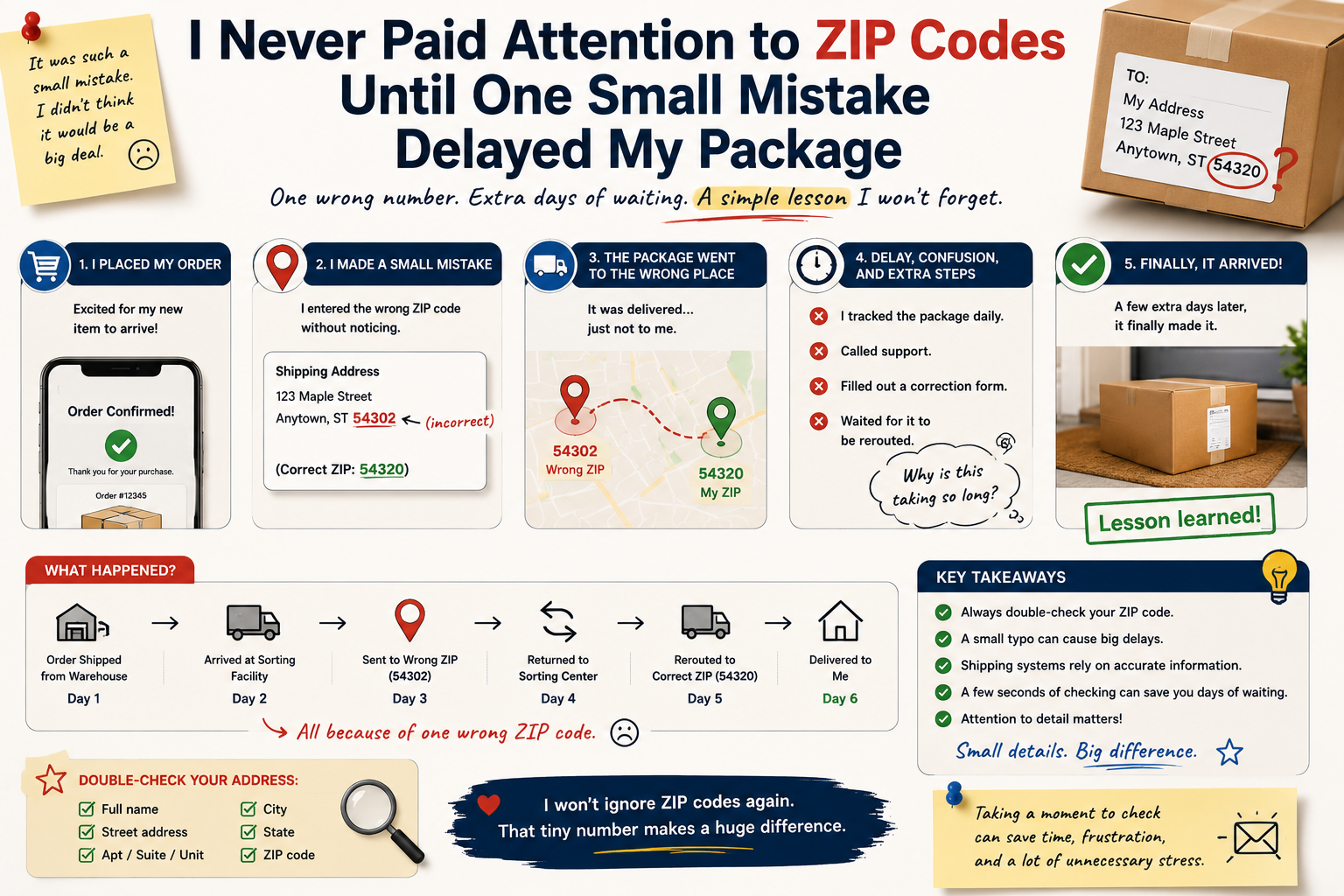
For years, I never gave much thought to ZIP codes. Whenever I filled out an address for an online order, I treated the ZIP code as just another field that had to be completed. I knew it was important, of course, but I never imagined that one small mistake could affect the delivery of a package.
That changed when I ordered something online and accidentally entered the wrong ZIP code. What followed was a useful lesson about addresses, delivery networks, and why seemingly small details can make a big difference.
A Normal Online Order
The story started like many online purchases. I found something I needed, added it to my shopping cart, entered my shipping information, and completed the order.
I carefully checked my name, street address, city, and phone number. Everything looked correct at first glance.
There was only one problem: I entered an incorrect ZIP code.
I did not notice the mistake when placing the order. The address looked familiar enough that I assumed everything would be fine.
After all, the street address and city were correct. How much difference could a few numbers really make?
I was about to find out.
The Package Did Not Arrive on Time
The estimated delivery date came and went.
At first, I was not particularly concerned. Packages can sometimes experience delays because of weather, transportation problems, busy delivery periods, or other unexpected circumstances.
I waited another day.
Still nothing.
Eventually, I checked the shipment information and noticed something unusual. The package had been processed through a location that did not seem to match the expected destination.
That was when I started looking carefully at the shipping information.
Discovering My Mistake
I reviewed the original order details and immediately spotted the problem.
The ZIP code was wrong.
I had accidentally entered a ZIP code associated with a different area. The rest of the address was correct, but that one small error had created confusion in the delivery process.
Suddenly, I understood why ZIP codes are included in shipping addresses.
They are not simply decorative numbers added to an address form. They help postal services and delivery companies identify geographic areas and route mail and packages more efficiently.
A mistake that seemed insignificant to me could be important to the people and systems responsible for moving thousands of packages every day.
Why ZIP Codes Matter
A complete address provides several pieces of information that work together.
The recipient’s name identifies who should receive the item. The street address identifies the specific location. The city provides broader geographic information, while the ZIP code helps narrow down the destination area.
When these details agree, sorting and routing can be more straightforward.
When one part is incorrect, however, the delivery process may require additional checking or rerouting.
My experience showed me that an incorrect ZIP code does not necessarily mean a package will be permanently lost. In many situations, other address information can help delivery personnel identify the correct destination.
However, it can still create unnecessary delays.
What I Did Next
Once I realized the mistake, I contacted the seller and checked the available shipment information.
Fortunately, the package could still be located within the delivery network. The correct address information helped clarify where it was supposed to go.
I was relieved, but I also felt slightly frustrated with myself.
The problem could have been avoided simply by checking five or six numbers before completing the order.
That was perhaps the most useful lesson of the entire experience.
The Importance of Double-Checking an Address
Since then, I have developed a simple habit.
Before placing an online order, I review my complete shipping address rather than only checking the street and city.
I specifically look at the ZIP code and compare it with a reliable address source when necessary.
This takes only a few seconds.
The same habit is useful when sending letters, registering for services, filling out forms, or providing an address to friends and family.
An accurate address can help reduce confusion and improve the chances that mail or packages reach the intended destination efficiently.
ZIP Codes Are More Than Delivery Numbers
My experience also made me realize that ZIP codes have uses beyond helping deliver packages.
They are commonly used to organize geographic information, support location-based services, determine service areas, and help businesses understand where customers are located.
For online shopping, ZIP codes can also be used to calculate shipping availability, delivery estimates, taxes, and other location-dependent information.
Because of these functions, accuracy matters in many situations—not just when waiting for a package.
A Small Mistake With a Big Lesson
The delayed package eventually arrived, and the problem was resolved.
Looking back, the incident was relatively minor. I did not lose the package, and the delay was manageable.
But it changed the way I think about addresses.
Before that experience, I saw a ZIP code as a small administrative detail. Now I understand that it can be an important part of the information used to guide a package through a complex delivery network.
It is easy to overlook small details when completing online forms, especially when we enter the same information repeatedly.
However, those details often have a purpose.
How to Avoid ZIP Code Mistakes
There are several simple ways to avoid making the same mistake.
First, keep your standard shipping address saved in your trusted shopping accounts so you do not have to enter it manually every time.
Second, review the ZIP code before confirming an order.
Third, avoid relying entirely on memory if you are unsure about the correct code. Check an authoritative postal or address source.
Finally, if you move to a new location, update your saved addresses across shopping accounts and other services.